

It’s that time again: the U.S. Army Corps of Engineers (the Corps) updated their nation-wide permit program which allows for certain activities that have minimal impacts to wetlands and other aquatic areas. Confluence works closely with public and private clients in Washington whose aquatic projects involve local, state, and federal permitting processes. We know that updates in one part of that system can affect how the others operate. Early planning and a clear understanding of how various permitting approvals intersect remain critical to keeping projects on track.
Here is a quick review of some of these changes:
New Nationwide Permit for Fish Passage Projects
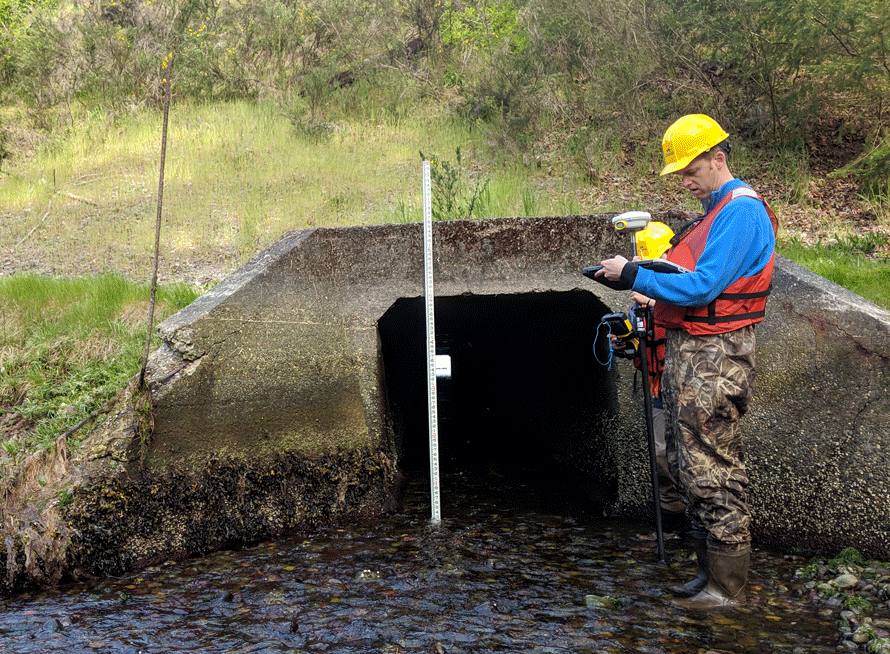
The Corps has authorized a new nationwide permit, NWP 60, for projects that improve fish and other aquatic organism passage, like culvert replacements and barrier removals.
At first glance this looks like a useful addition. However, a nationwide permit’s utility depends on how it interacts with Corps issued regional conditions, state water quality certification, and other regulatory requirements.
In Washington, the Department of Ecology (Ecology, hereafter) did not issue programmatic Section 401 water quality certification for NWP 60. That means most projects using NWP 60 will likely require individual water quality certification, which reduces some of the streamlining that nationwide permits are meant to provide. This could mean that many fish passage projects will continue to move forward under other existing nationwide permits like NWP 14 Linear Transportation, for which programmatic 401 certification as been issued. But NWP 60 adds another tool to the toolbox and may be an effective option for some projects.
NWP 3: Clarification of Maintenance Activities
The 2026 updates also include clarification around the widely used Nationwide Permit 3 (NWP 3) for maintenance activities. The update states that maintenance activities must remain within the existing footprint and purpose of the original authorized structure. The Corps clarified in the update that the emphasis of NWP 3 is on work occurring within the original footprint and is for maintenance projects closely tied to upkeep of existing structures. Projects that result in changes to the original facility or expand the footprint of a structure are less likely to qualify as maintenance than in the past and may require authorization under a different permit.
NWP 48: Commercial Shellfish Mariculture Still Unavailable
For marine and aquaculture clients, the status of NWP 48 (Commercial Shellfish Mariculture) remains unchanged—and unavailable—in Washington. Federal court decisions previously vacated this permit in the state, and the 2026 NWP reissuance does not restore its use. As a result, aquaculture projects generally continue to move forward through project-specific federal permits.
Depending on the activity, the Corps may review projects under Section 10 of the Rivers and Harbors Act—often through a Letter of Permission for aquaculture gear and structures—or through an individual Section 404 permit if dredged or fill material is involved. These federal permits are typically coordinated with water quality certification from Ecology, Hydraulic Project Approval from the Washington Department of Fish and Wildlife, local shoreline permits, and ESA consultation where applicable.
While that process can be more involved than a nationwide permit, it is a well-established pathway that continues to support shellfish projects across the state.
Seattle District Regional Conditions
Regional conditions adopted by the Seattle District continue to shape how nationwide permits are used locally. Several updates focus on nearshore habitat protection in the Salish Sea. These conditions may affect projects that disturb nearshore sediments or involve shoreline stabilization. The updated conditions also expand situations where pre-construction notification to the Corps may be required, including areas where treaty fishing rights could be affected.
Washington Water Quality Certification
Many projects using nationwide permits must also obtain Section 401 Water Quality Certification from the Washington Department of Ecology.
Ecology issued a programmatic certification decision for the 2026 permits with statewide conditions and permit-specific determinations. While many permits received programmatic approval, some activities still require individual certification.
The certification also introduces new language related to nearshore habitat considerations such as forage fish spawning areas, feeder bluffs, and shoreline treatment approaches. These topics are already familiar in Washington through Hydraulic Project Approval reviews and shoreline permitting, but their inclusion within the Section 401 process means they may now arise in another part of the regulatory review.
Because these elements are relatively new within the Section 401 certification framework, there may be an initial period where agencies and applicants are working through how the conditions apply to specific projects. Projects in nearshore environments may require additional documentation to demonstrate consistency with the certification conditions.
Planning ahead
For most projects, the overall permitting framework under the Corps Nationwide Permit Program remains largely the same. However, even small adjustments in how federal permits, state certification, and regional conditions can influence the type of information needed to move a project forward. Confluences takes these potential interactions into account early in project planning to support a smoother review timeline.