

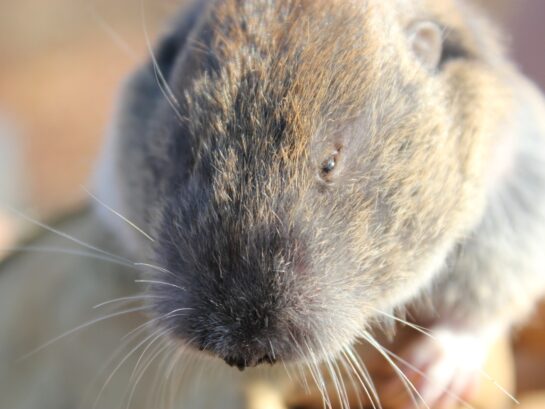
 The Yelm pocket gopher is a threatened species that lives on the Yelm prairie. Confluence worked with Yelm on a Habitat Conservation Plan to preserve their prairie habitat where bumble bees and other pollinators nest in their burrows. (Photo: USFWS)
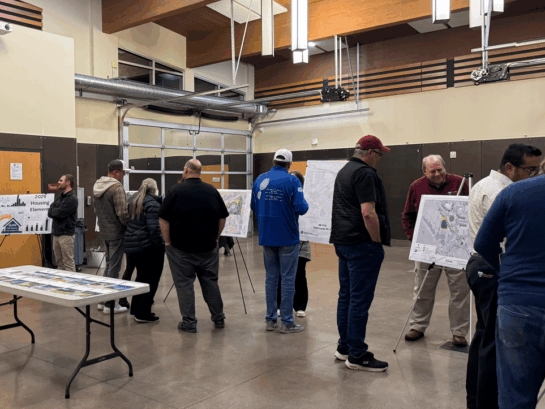
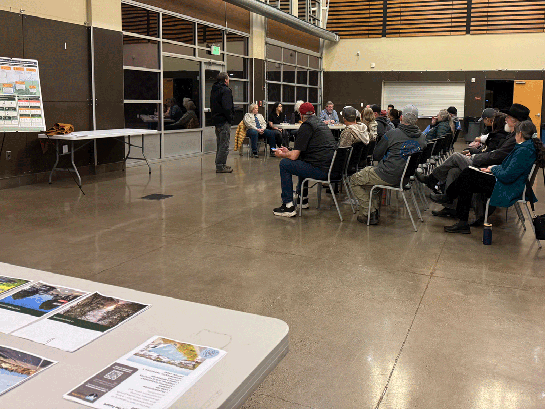
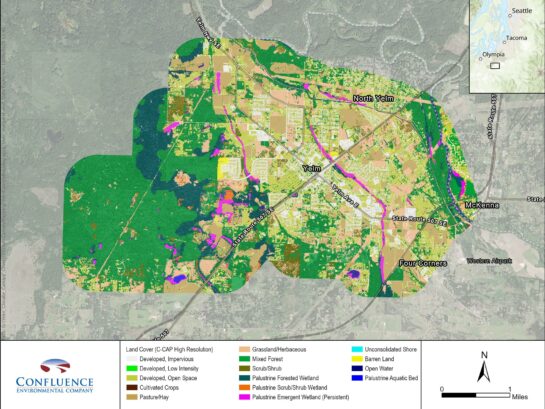
Last December, Confluence joined Yelm city planners at the unveiling of their 2025 Comprehensive Plan. Neighbors gathered at the Yelm Community Center to peruse the poster displays detailing new goals and policies aimed at balancing growth with climate resilience.
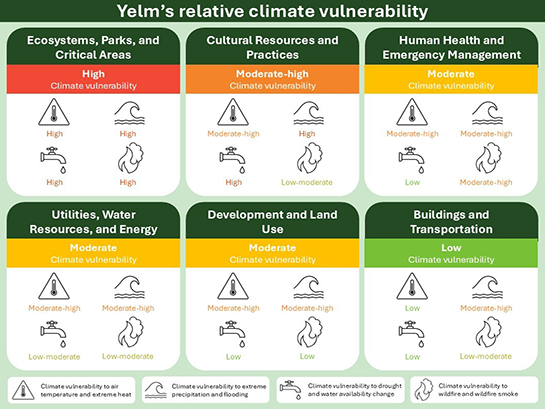
According to climate researchers at the University of Washington, Yelm will likely see more wildfires in the summers and flooding in the winters as average global temperatures rise. Since new state climate planning requirements took effect in 2023, Confluence has worked with Yelm officials to develop supporting analyses, participate in public engagement events, and compile the final 2025 Comprehensive Plan.
Confluence was also able to support Yelm in a couple unexpected ways: First by helping City officials secure state funding earmarked for climate planning, and secondly, by using a tree canopy study—which Confluence completed as part of the climate vulnerability assessment—to also meet the City’s stormwater permitting requirements. By designing the analysis to serve two purposes, Confluence was able to help the City meet both regulatory and planning requirements using state grant funding.
Confluence principal ecologist, Phil Bloch, said, “For city planners in Puget Sound who need NPDES permits for municipal stormwater planning, this tree canopy study is key,” he said.
Gary Cooper, Yelm’s planning and building manager, said, “I’ve worked with a lot of consulting firms–many don’t meet deadlines, but Confluence always does. Especially if you are under the gun. I really trust Confluence’s work on the Habitat Conservation Plan, and that trust has extended into the Climate Planning project.”
Of Gophers and Growth
Confluence began working with Yelm in 2022 as city planners wrestled with the challenges of meeting planned development objectives while conserving habitat for the Yelm pocket gopher, one of four federally-listed subspecies of the Mazama pocket gopher.
Phil Bloch, Confluence principal ecologist, said, “South Puget Sound prairie habitats contain numerous species that are endemic to the region. As their habitat disappears, so do they.”
For many years, the pocket gopher’s burrowing habits were considered a nuisance by many residents. But for other crucial species, like bumble bees, these burrows aerate the soil and create habitat crucial for the pollinators’ survival. Over the past century, pressures from land use change and urbanization, suppression of natural fires, and the introduction and spread of non-native vegetation (e.g., Himalayan blackberry and scotch broom) have caused the Yelm pocket gopher to lose 99% of their prairie habitat.
“When we lose biodiversity in a complex system, we don’t know when and where a cascade of extinction will start. If you keep pulling threads—that is, eliminating habitats—you will eventually start to lose the ecological services that people, and the high-profile species we value, depend on,” said Eric Doyle, Confluence managing senior aquatic ecologist and lead author of the Habitat Conservation Plan.
“I really trust Confluence’s work on the Habitat Conservation Plan, and that trust has extended into the Climate Planning project.”
Gary Cooper, Yelm Planning and Building Manager
Confluence is working with the City of Yelm and the U.S. Fish and Wildlife Service to develop a conservation lands system which will result in the permanent protection and restoration of up to 500 acres of habitat suitable for pocket gophers and other imperiled prairie species. This will fully offset the projected impacts of development activities permitted by Yelm under the Habitat Conservation Plan.
Phil Bloch said, “Yelm’s Habitat Conservation Plan works in combination with city zoning and development regulations to focus residential and commercial development on areas where gopher soils don’t exist. Where impacts to gophers are anticipated, there is now a mechanism to offset those impacts with conservation outside of the city.”
The Habitat Conservation Plan will allow the City to streamline permitting of future development while meeting obligations to avoid, minimize, and mitigate incidental take of federally-listed species.
*